


Tiny yet omnipresent in our collective imagination, the ant crosses cultures as a living paradox: a universal symbol of hard work, it embodies both wisdom and the absurdity of our existence.
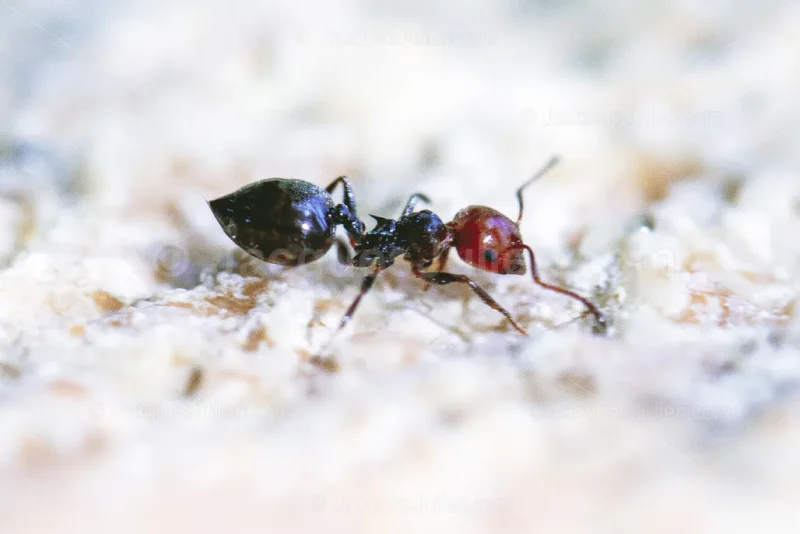
From the sacred anthills of Mali to La Fontaine’s moralizing fables, this insignificant insect carries on its microscopic shoulders a weight of meaning that infinitely exceeds its size.
The Tireless Worker: A Universal Moral Lesson
The ant commands attention from the outset. That tireless industry. For centuries, it has mirrored the human virtues we’d like to see as exemplary. The Book of Proverbs doesn’t mince words: “Go to the ant, thou sluggard, consider her ways and be wise.” The image is simple. Almost unforgiving. Without ruler or overseer, the insect gathers through summer, prepares for winter, orchestrates its survival with a discipline that sometimes shames our overconfident reason.
Early Christian thinkers refined this lesson. The Physiologus, dwells on details that seem trivial at first: Why do ants bite the grains they store? To prevent unwanted germination. How do they tell wheat from chaff? Through an instinctive discernment that commands admiration. Biology slips into allegory. Just as the ant sorts and neutralizes, believers are called to move past the dead letter of sacred text—to extract its living meaning.
Clement of Alexandria takes up this image in the Stromateis with some gravity. He praises the insect that amasses diverse provisions to weather hard times. Animal foresight illuminating human wisdom. Not through slavish imitation, but by analogy.
The Flip Side: Selfishness Disguised as Virtue

Yet this figure of industry cracks when you look at it differently. La Fontaine topples the idol with one sharp stroke in his famous fable,
His ant has no charity: she calculates, hoards, refuses. Faced with the starving grasshopper, she offers cold morality. Almost cruel. Labor isn’t virtue anymore—it’s justification for selfishness. Materialistic accumulation turns barren, closed in on itself.
Other traditions converge here. Tibetan Buddhism sees in the anthill obsessive attachment to material goods, pointless agitation, doing that leads nowhere. Saint Bernard pushes further: “What are we but ants devoted to useless, vain labors?” Perfect organization guarantees nothing.
In India, the metaphor carries different weight. The ant points to the insignificance of individual existences trapped in multiplicity, closed off from Brahman. The infinitely small reveals the divine infinite only through its lack. A metaphysical negative.
The Cosmic Ant: When the Infinitely Small Births the World
And yet—elsewhere, the ant is neither ridiculous nor petty. It participates in the very creation of the world. Among the Dogon and Bambara of Mali, it occupies a central place in cosmogonic narratives. During the primordial union of sky and earth, the latter’s generative organ took the form of an underground anthill. Genesis passed through the insect.
From this matrix emerged two fundamental gifts: speech and the art of weaving. The ants were silent mediators of this transmission between divine and human. The analogy between anthill and female anatomy—rounded mound, fertile opening—remains vivid in ritual practices. Some women still sit upon these mounds to implore Amma, hoping for a child.
This cosmology isn’t abstract. It extends into concrete practices. Certain ant species supposedly signal underground water; follow their trail, sometimes you find a well. The very earth from their habitats, used in initiations tied to the digestive organs, embodies a buried vital force ready to spring forth. People have also studied their architecture to design dwellings.
More troubling: near anthills, certain holders of power—blacksmiths, for instance—can supposedly transform themselves into panthers or falcons. Temporarily. As if the insect, minuscule and relentless, opened a passage between realms.
So the ant escapes any single reading. Model of wisdom or figure of vanity, symbol of blindness or creative principle—it reveals less what it is than what each culture chooses to project upon it. Small, innumerable. It burrows beneath our certainties. Patiently.
Medicine of the Infinitely Small
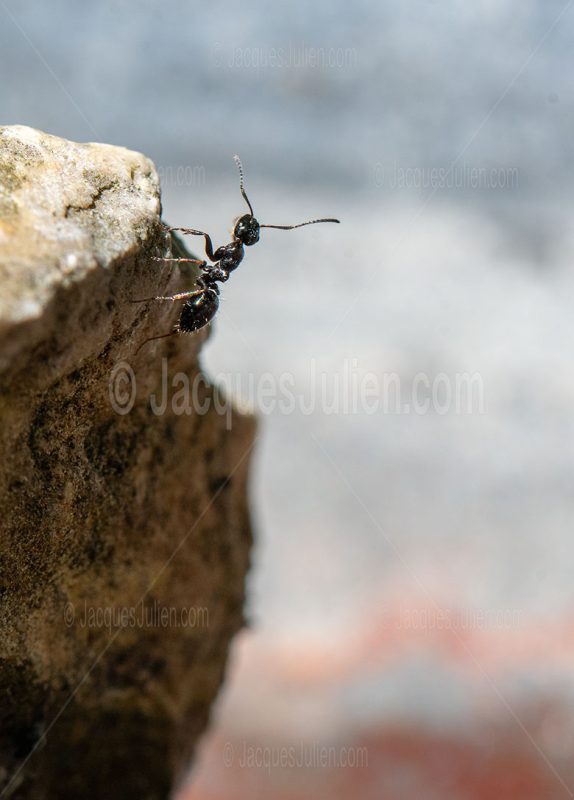
Medical imagination also seizes upon the ant. In Morocco, these insects were fed to the lethargic to awaken them. In medieval France, women brought their sick children to anthills for healing. The technique varied by region: an egg was placed in the anthill, and the illness would supposedly diminish as the ants gnawed it away.
In central France, disturbing an anthill during drought would supposedly provoke rain. In Creuse, destroying one in the evening guaranteed the next day’s downpour. The anthill-water association, already present in Africa, resurfaces in European folklore.
Myrmex or Pride Punished: The Ant in Greek Mythology
The ancient Greeks never looked at the ant as a mere insect. They wove for it a moral tale, almost exemplary. Pride and reparation. It concerns a mortal, Myrmex, who won Athena’s favor and committed a very human fault: she claimed as her own a decisive innovation—the plow. The error isn’t technical. It’s symbolic. Appropriating what belongs to divine gift.
The sanction came immediately. Athena transformed her into an ant. Degradation, apparently. But the myth refuses pure cruelty—true to its logic of compensation. Zeus intervenes. He softens the penalty, dilutes it: to entire ant colonies, he restores human form. The Myrmidons are born.
This legendary people of Aegina, renowned for endurance in labor, carry in their very name the trace of the insect. Myrmex. Inherited tenacity. Repeated effort. Acceptance of unspectacular toil. Another tradition from Thessaly attributes the agricultural invention to a nymph of the same name—as if the myth couldn’t decide between fault and foundation, punishment and origin.
In those regions, insect colonies were objects of singular veneration. Not the individual. The collective form. The lesson is clear enough: isolated pride dissolves into community. Outside its colony, the ant doesn’t exist. Doesn’t survive. Means nothing.
Symbol of organized labor serving the group, it embodies self-denial, solidarity, a kind of silent honesty. Virtues the Talmud, much later, would recognize in turn. As if across cultures the ant recalled this unsettling idea, tirelessly: effort has lasting value only when it ceases to be personal.
The Celtic Exception: The Lame Ant
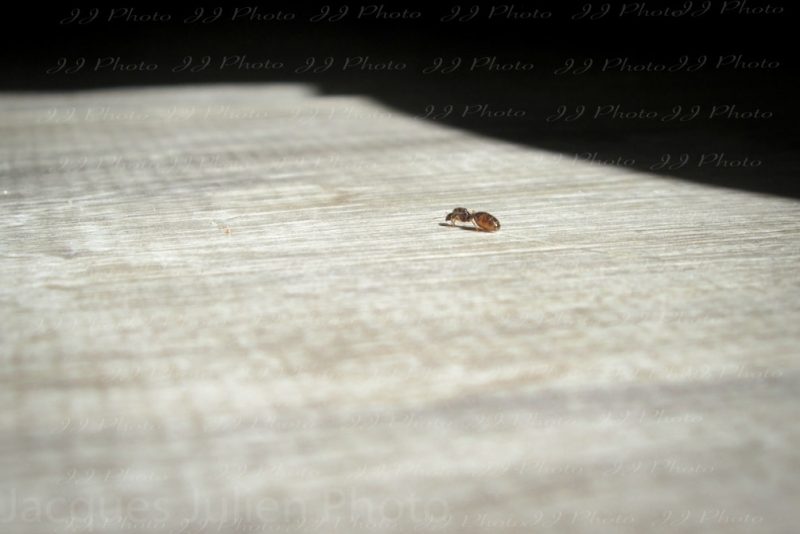
In the Celtic universe, the ant occupies only a bit part, proportional to its tiny size. The Welsh tale of Culhwch and Olwen summons it just once. A tyrannical giant imposes on the hero an interminable list of impossible objects, including a precise measure of flax seeds. Local ant colonies accomplish this prodigious collection, except for one missing grain. Before twilight, a handicapped worker ant comes to fill this gap.
This singular detail, the crippled insect, transforms the scene into parable: the loyal servant transcends its infirmity through fierce determination. Handicap becomes the supreme attestation of fidelity.
The Vertigo of Dreams: Solitude and Sterile Agitation
Dream interpretation reveals the symbol’s ambivalences. A solitary ant in a dream signals dangerous isolation. Without its community, the individual is lost. But an anthill is scarcely more reassuring: it translates cerebral agitation that’s certainly organized, apparently healthy from the outside, but revealing a mind too logical, too coherent, too withdrawn into itself.
Fixed on a single, precise goal, this mind forbids itself any evolution, any openness to the world. Dream ants reflect excessive attachment to material goods—an attachment frustrating to the dreamer’s sensibility and imagination. The apparently confused comings and goings of ants symbolize, according to Indian thought, the absurd agitation of people who haven’t yet found access to higher truths.
The Modern Ant: An Anxious Mirror of Our Societies
With modernity, the ant ceases to be merely a symbol of foresight or order. It becomes something else entirely: a source of unease.
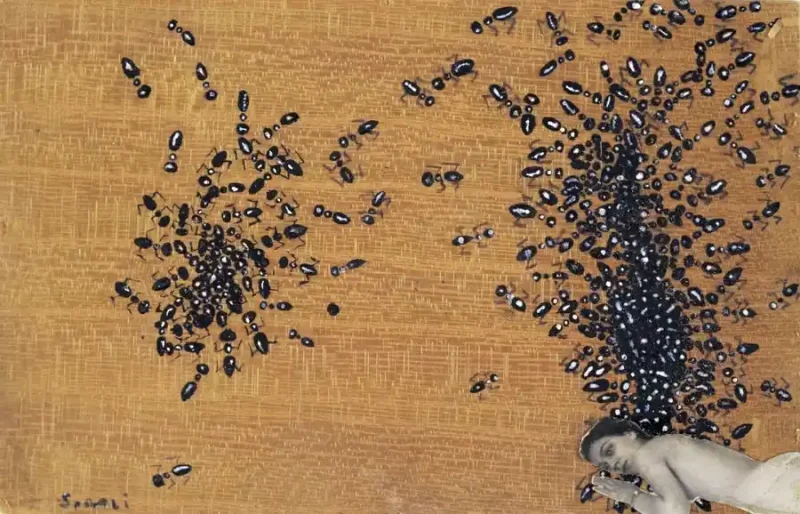
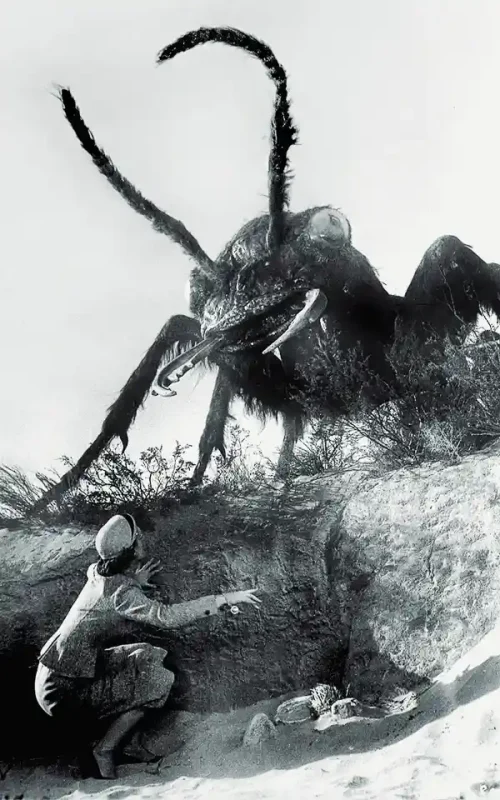
It now evokes the individual swallowed by the social machine, an anonymous worker, a faceless silhouette, a replaceable cog in a bureaucratic system that runs perfectly well without him. This troubling image runs through twentieth-century art. The Surrealists seize upon it. In Dali’s work, ants build nothing: they swarm, corrode, and signal inner decay and proliferating anxiety. Cinema amplifies this diffuse fear. Them! (1954) turns the ant into a nuclear monster, a direct expression of Cold War anxieties. With Phase IV, Saul Bass goes further still: ants become intelligent and strategic, capable of surpassing humanity itself in an ultimate Darwinian reversal.

Yet a contradictory fascination emerges. The anthill captivates scientists: how can apparent chaos generate such efficient organization? Cognitive science sees in it a model of collective intelligence—decentralized, leaderless, without a controlling mind. Bernard Werber popularizes this idea in The Ants (1991), drawing multiple parallels between their society and ours, some of them deeply unsettling. Popular culture then attempts to soften the image: Ant-Man humanizes the insect, granting it a heroic dimension. Ecology, for its part, turns the ant into a symbol of resilience, of survival in the face of collapse.
Still, unease prevails. The ant’s collective mode of existence forcefully challenges our individualistic certainties. Are we really so different? What if our freedom were little more than a narrative layered over social mechanisms just as constraining as those of the anthill?
In the contemporary imagination, the ant crystallizes the paradoxes of modernity: efficiency versus freedom, the collective versus the individual. An ambivalent figure, it mirrors our own contradictions in the face of social organization. Tiny and silent, it now reflects back to us our most profound existential questions.
The Infinite in the Infinitesimal
At the end of this symbolic journey, the ant appears as a formidable revealer. Of our own contradictions, first.
It’s model and foil. Wisdom and blindness. Creation and sterile repetition.
Neither La Fontaine nor Proverbs is wrong: it embodies simultaneously virtuous foresight and selfish accumulation, practical intelligence and absence of transcendence. As Indian thought noted, the infinity of smallness evokes the infinity of divinity—by contrast as much as by analogy.
This insect poses a dizzying question. Our organized lives, our meticulous labors, our human anthills—do they have more meaning than the incessant back-and-forth of these insects? Or are we, as Saint Bernard suggests, just ants devoted to pointless tasks?
The answer may lie in this very paradox. Recognizing the ant in us isn’t diminishment or exaltation. It’s accepting our condition as social beings, infinitesimal in the universe, yet capable—like the Dogon ants—of transmitting Word and technique, speech and know-how.
The infinitely small sometimes carries the infinitely great.
“Neither can survive individually.” This phrase captures the ant’s ultimate teaching. Whether we celebrate it or criticize it, the ant reminds us that we too are communal creatures. Our greatness or our smallness is measured against the collective to which we belong.
© Jacques Julien
You liked this article? Share it or discover more!


French photographer based in Paris. This site shows my wildlife and architecture photos, creative portraits, black and white street photos through various galleries, a stock photo library and photography services.